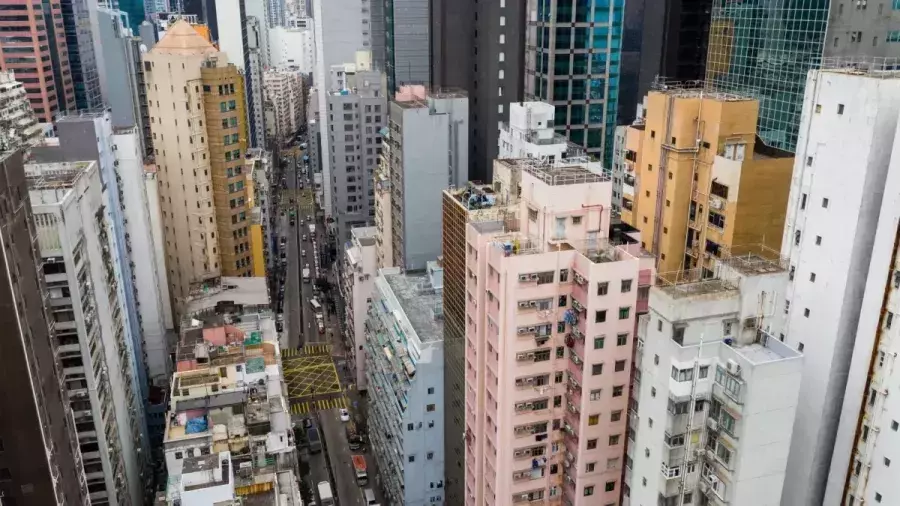
Hong Kong's diverse property landscape is poised for a complex evolution in the coming year, with projections suggesting notable shifts across commercial and residential segments. While the prime office market in Central anticipates a significant upturn, other areas may experience more subdued or even negative growth. Concurrently, the residential sector, having recently demonstrated strong transactional vigor, faces potential moderation due to evolving monetary policies. The retail market, despite showing signs of recovery in consumer spending and tourism, continues to grapple with cautious investment sentiment.
JLL's recent assessment forecasts a substantial appreciation of 10-15% for Central's Grade A office rents in 2026. This optimistic outlook is primarily fueled by expected activity in initial public offerings (IPOs), a continued influx of capital from mainland China, and the impending implementation of a carried-interest tax exemption, which is designed to attract investment funds. These factors collectively are expected to enhance demand for premium office spaces in the city's financial heart.
However, this positive trend is not uniformly distributed across the Special Administrative Region's office market. Other central business districts are predicted to see a more modest rental increase of up to 5%. In contrast, Hong Kong East might experience a decrease of up to 5%, and Kowloon East faces a more considerable potential decline of 5-10%. This divergence highlights a fragmented market where location and grade play crucial roles in performance.
The office leasing market demonstrated positive net absorption of 279,000 square feet in June, indicating a healthy demand for space. Overall office rents witnessed a slight uptick of 0.1% month-on-month, with Central leading this growth at 0.6% and Tsim Sha Tsui following closely with a 0.5% rise. The overall Grade A office vacancy rate saw a decrease to 13.1% by the end of June, with Central's rate falling to 8.8% and Kowloon East's to 20%.
In the residential domain, June saw a significant surge in transaction volumes, reaching 7,650 units—a 512-unit increase from the previous month. This marks the highest monthly total since all property cooling measures were lifted in the first quarter of 2024, signaling renewed buyer confidence. The secondary market was the primary driver of this growth, with transactions climbing by 929 units to 5,657, while primary market sales slightly receded by 413 units to 1,993. Mass-market residential capital values also edged up by 0.9% month-on-month, reflecting a broad-based improvement.
Despite this buoyancy, JLL cautions that an anticipated shift towards higher interest rates could temper the near-term growth of the residential market. The US Federal Reserve's decision in June to raise its median end-2026 interest-rate forecast from 3.4% to 3.8% has significant implications. Persistent inflationary pressures and elevated energy prices, partly stemming from geopolitical tensions in the Middle East, have led investors to assign a roughly 70% probability to an interest-rate increase as early as September. Such a move would likely increase borrowing costs, potentially cooling buyer enthusiasm.
Hong Kong's retail sector also continued its path to recovery, with sales expanding by 7.9% year-on-year to .8 billion in May. Categories like jewelry, watches, and valuable gifts maintained their resilience, and optical shop sales recorded their first growth since 2024, increasing by 10.3%. Tourist arrivals also showed positive momentum, rising by 9.5% year-on-year to 4.46 million, with visitors from mainland China increasing by 11.6% to 3.49 million. However, some short-haul markets, such as South Korea, continued to see declines in visitor numbers.
The availability of more favorable rental terms encouraged several local retailers, including eGG Optical Boutique, Sasa, and Spaghetti House, to re-establish their presence on prime shopping streets in June. Nevertheless, JLL notes that despite these improvements in consumption and tourism metrics, investor sentiment towards retail properties remains reserved, indicating a cautious approach to long-term commitments in this segment.
The overall forecast for Hong Kong's real estate market in the coming period suggests a landscape of divergent trends. While the Central office market shows strong potential for growth driven by specific economic factors, other segments face varied challenges and opportunities. The residential market's recent surge may be tempered by future interest rate adjustments, and despite a retail recovery, investment remains hesitant. This complex interplay of forces will shape the city's property performance in the short to medium term.